
Wiltshire · Wasp Nest Removal
Wasp Nest Removal in Wiltshire
Local, fully insured technicians covering Wiltshire. Same-day and next-day appointments where available.
Wiltshire
Get your free Wiltshire quote
Call 01722 449957 for Wiltshire, or send an enquiry and we will be straight back.
- Covered by our local Wiltshire team
- Same or next day where available
- Honest, upfront pricing
Wasps Removal provides wasp nest removal throughout Wiltshire. Our local technicians know the area, respond quickly, and back every treatment with a clear guarantee.
What you are actually seeing: wasp, bee, or hornet?
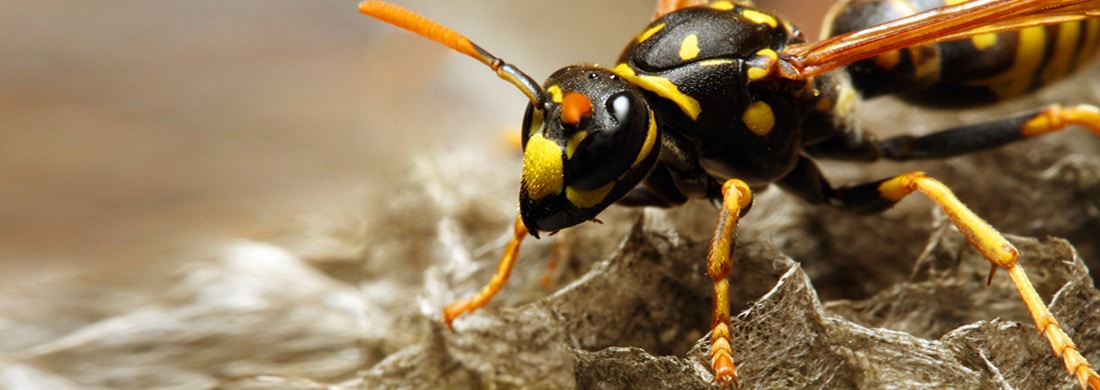
Most people call us about wasps and a fair few turn out to have bees, so a quick check saves a lot of worry. The fastest tells are shape, surface and behaviour. Wasps look smooth and shiny with a sharply pinched waist and a hard, bright yellow-and-black banded body, and they get noticeably bolder the closer you are to the nest. Bees look softer and furry, rounder in the body, and far more relaxed unless you are right on top of them. Hornets are simply a bigger version of the wasp shape, browner and yellower in colour, and you are most likely to meet them near woodland or rural gardens. If you are not sure, send us a photo before you do anything else and we will tell you what you are dealing with.
- Wasp: slim, shiny, hard-bodied, bright banding, sharp waist, defensive near the nest.
- Bee: furry, rounder, calmer, more interested in flowers than in you.
- Hornet: like an oversized wasp, browner and larger, usually rural or woodland-edge.
- Steady daytime traffic in and out of one hole in a roofline, soffit or air brick almost always means an active nest behind it.
Why a wasp nest is never a safe DIY job
Wasps are built to defend. Unlike a bee, a single wasp can sting repeatedly, and a disturbed colony does not retreat, it counter-attacks and will chase. That matters most for anyone with a sting allergy, where one sting can become a medical emergency, but it catches plenty of people with no allergy at all, usually halfway up a loft ladder or a set of steps with nowhere to go. Shop-bought aerosols are the classic trap: they rarely reach far enough into the nest to kill the colony, and the cloud of agitated wasps that comes back out is the part that sends people to A&E. We turn up with proper protective clothing, the right professional treatment, and the equipment to reach nests at height or in a cavity without standing in the firing line.
How we treat a wasp nest, step by step
On arrival the technician finds the nest by watching where the wasps are entering and leaving, which is often a single hole in a soffit, an air brick, a roof tile gap or a hole in the ground. Once that entry point is pinned down, they decide whether to treat the nest directly or treat the entry the wasps are using; the principle is the same either way. The professional treatment does not work like an instant knock-down spray, and that is deliberate. Wasps walk through it as they pass in and out and carry it deep into the nest on their bodies, spreading it to the workers and the queen so the whole colony is dealt with rather than just the few wasps you can see. Within a few hours the activity usually falls away sharply, and you may notice dead wasps dropping from the entry, which is a good sign the treatment has taken hold.
- Locate the live entry point from the wasps' own flight path.
- Treat the nest or the entry directly with a professional product.
- Returning wasps spread it through the colony to reach the queen.
- Activity normally drops within hours; full die-off can take a little longer.
Wiltshire
Towns we cover in Wiltshire
- Salisbury
Good to know
Wiltshire, common questions
How quickly can you get to me?
In most of the country we can offer a same-day or next-day visit, and we work weekends through the summer when wasp calls are heaviest. The honest answer depends on demand and where you are on the day, so call us with your postcode and we will tell you the earliest realistic slot rather than a vague promise.
Do you cover rural and hard-to-reach areas?
Yes. Our technicians are based locally across the UK rather than run out of one office, so villages, farms and isolated properties are covered as standard. Rural callouts often involve hornet nests or wasp nests in outbuildings, hedgerows and ground burrows, which we deal with routinely. If you are unsure you are in range, give us your postcode and we will confirm.
How much does wasp nest removal cost?
Pricing depends on the type of nest, how many there are, and how easy the nest is to reach, so a nest at ground level is not the same job as one in a high roof void. We will give you a clear, no-obligation price before any work starts, with no surprise charges added afterwards, so you know exactly where you stand before you book.
Is the treatment safe for my children and pets?
Yes, when it is carried out by a trained technician. The product is applied to the nest or its entry point, not sprayed around your home, and we will tell you the short period to keep clear of the treated spot. Once it has taken effect, usually within a few hours, the area is fine for normal use again.
Can I just deal with a wasp nest myself?
We strongly advise against it. Supermarket sprays rarely reach far enough into a nest to kill the colony, and the agitated wasps that pour back out are what cause most sting injuries. Add a ladder or a confined loft to that picture and the risk climbs sharply. A professional visit is faster, safer and far more likely to solve it in one go.
How do I know whether I have wasps or bees?
Wasps are smooth, shiny and sharply waisted with bright banding and get bolder near the nest, while bees are furry, rounder and far calmer. The quickest route is to send us a photo before you do anything, and we will identify it from that. It matters, because wasps are treated and bees are protected and relocated wherever we can.
Wasps problem in Wiltshire?
We can usually be out the same or next day. Speak to the team now.